Back
Activities
Mt. Fuji Day Trip from Tokyo: Chureito Pagoda, Lake Kawaguchi & Oshino Hakkai

Activities
You’ve seen the photo a thousand times: a vermillion five-story pagoda in the foreground, Mount Fuji rising behind it. That shot is taken from Arakurayama Sengen Park, about two hours from Tokyo — and this tour is one of the most popular ways to get there without renting a car or wrestling with train transfers.
It’s a 10-hour guided bus tour that packs four of the Fuji area’s most photogenic spots into a single day, and with a 4.8 rating from over 3,000 travelers, it has one of the strongest track records of any Fuji day trip on GetYourGuide.
Why This Tour
Getting to the Fuji Five Lakes area on your own is doable but tedious: it’s a two-hour bus or a train ride with transfers, and the four stops on this itinerary are spread out enough that connecting them by local bus eats most of your day. A guided coach solves all of that — you board once in Tokyo, and the logistics disappear.
The stop selection is also smarter than most. Alongside the famous pagoda and Oshino Hakkai, this tour includes Saiko Iyashi-no-Sato Nenba, a reconstructed thatched-roof village that many competing tours skip. It’s the least crowded stop of the day and, for a lot of travelers, the sleeper favorite.
The Itinerary, Stop by Stop
The bus departs Tokyo Station at 8:00 AM or Shinjuku Station at 8:30 AM, with roughly a two-hour drive to the Fuji area (longer if traffic is bad — build some flexibility into your evening plans).
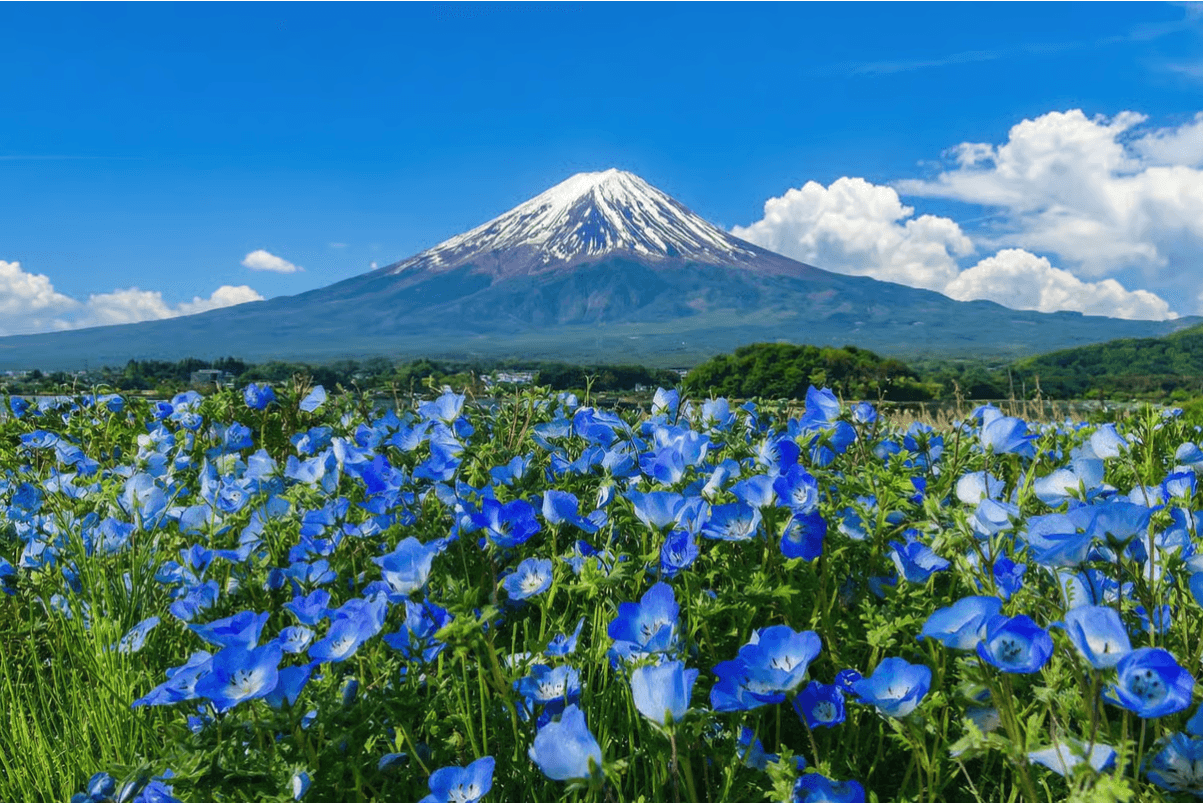
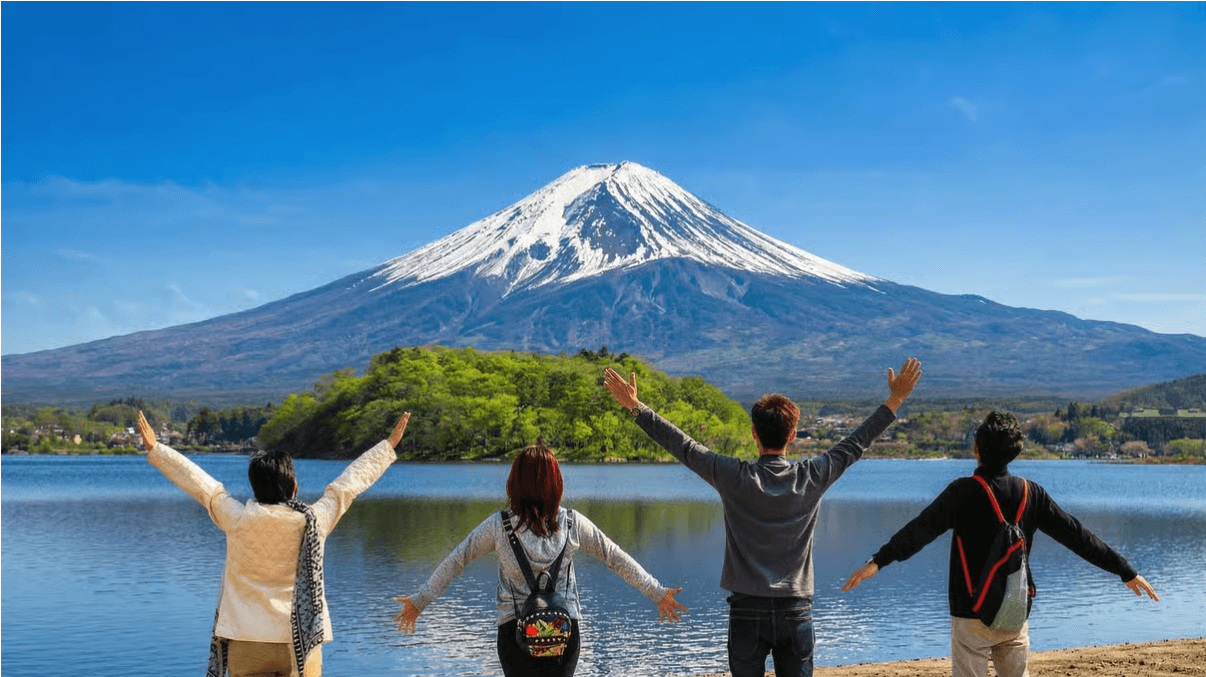
1. Lake Kawaguchiko & Oishi Park (about 40 minutes). A lakeside park where seasonal flowers stretch toward Mount Fuji — cherry blossoms in spring, lavender in early summer, fiery kochia bushes in autumn. This is your warm-up photo stop, and on a clear day the lake-plus-mountain composition is hard to beat.
2. Saiko Iyashi-no-Sato Nenba (about 1 hour). A quiet village of traditional thatched-roof houses, rebuilt to preserve local crafts, with Fuji framed between the rooftops. If Oshino Hakkai’s crowds wear you out later, this is the stop you’ll remember fondly.
3. Oshino Hakkai (about 1 hour). A UNESCO-recognized cluster of eight springs fed by decades-old snowmelt filtering down through Mount Fuji. The water is startlingly clear, and local legend says drinking it brings health and long life — there’s a spot where you can try it yourself. This is also the best stop for snacks: grilled dango, senbei, and croquettes from the village stalls.
4. Arakurayama Sengen Park & the Chureito Pagoda (about 1 hour). The finale. You’ll climb roughly 400 steps to the observation deck where the pagoda and Mount Fuji line up in that iconic composition. Fair warning from recent travelers: the viewpoint gets seriously crowded, and queues for the best photo angle can be long — head up promptly when you arrive rather than browsing at the bottom first.
The bus returns to Tokyo in the evening, wrapping up a roughly 10-hour day.
What’s Included (and What Isn’t)
Round-trip coach transport from Tokyo with a live guide (English available)
All four sightseeing stops above
Free cancellation up to 24 hours in advance, and you can reserve now and pay later
Lunch is not included. Plan to buy food at the stops — Oshino Hakkai has the best options — or bring something with you. Entrance to the sites on this route is generally free or covered, but keep some yen handy for snacks and souvenirs (more on that below).
Good to Know Before Booking
The 400 steps at Chureito Pagoda are real. There’s a winding slope path as an alternative to the stairs, but if anyone in your group has mobility concerns, factor this in — the famous view is only from the top.
The schedule can shift with traffic and weather, and stop order or duration may be adjusted. Reviewers occasionally mention the final stop feeling rushed, so prioritize the photo you care about most at each location.
Seasonal swaps happen. In late autumn and winter, some Fuji-area tours substitute stops (for example, maple corridors or different viewpoints), so double-check the itinerary details for your date.
Wear comfortable shoes. Between the lakeside walks, the village, and the pagoda climb, you’ll be on your feet a lot more than a typical bus tour.
Will You Actually See Mt. Fuji?
Honest answer: not guaranteed. Fuji makes its own weather, and clouds can hide the summit even on days that look clear from Tokyo. Your best odds are early mornings from November to February, when the air is driest — which is also when the mountain wears its most photogenic snowcap. In summer, visibility is a coin flip, so treat a full view as a bonus rather than a promise. The itinerary itself (springs, village, lakeside) still holds up on a cloudy day, which is part of why this route reviews so well year-round.
Cash Tips for the Fuji Area
Tokyo has largely gone cashless, but the Fuji Five Lakes countryside hasn’t gotten the memo. The snack stalls at Oshino Hakkai, the craft shops at Iyashi-no-Sato, and many small vendors around Kawaguchiko still run on cash — and since lunch isn’t included on this tour, you’ll almost certainly be buying food at these very places.
ATMs are scarce once you leave Tokyo, so sort your yen out before the 8:00 AM departure. The fastest option is a SMART EXCHANGE currency exchange machine: swap your home currency for yen in seconds, no bank counter or airport queue required, and board the bus with enough cash to eat your way through the springs and villages without a second thought.
Ready to lock in a date? Check availability and current pricing on GetYourGuide below. Free cancellation up to 24 hours before departure.
Related Articles
Keep Exploring.